
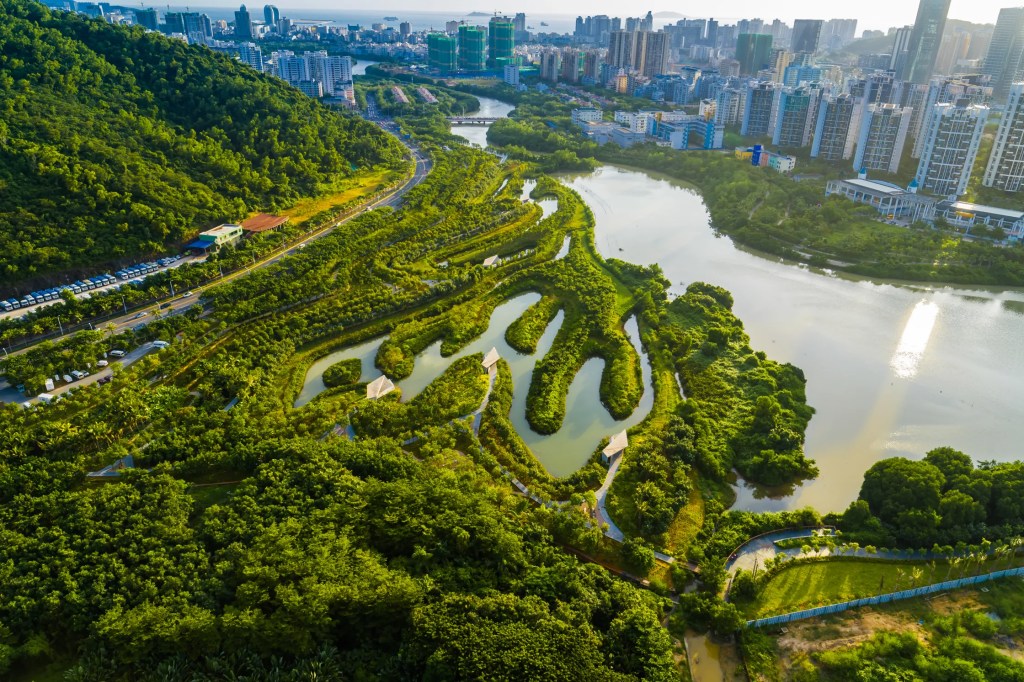
[Featured Image from: https://www.wired.com/story/the-designer-whos-trying-to-transform-your-city-into-a-sponge/ Credited Image as: “Sanya Mangrove Park is just one of many “sponge” projects in China, a way to work with water instead of fighting it. COURTESY OF THE CULTURAL LANDSCAPE FOUNDATION”]
In 2015, the United Nations (UN) came together to create 17 Sustainable Development Goals (SDG) with a goal of attaining peace and prosperity for the people and the planet through partnership by 2030 (see: https://sdgs.un.org/2030agenda).
In 2025, the UN reviewed our progress toward these goals and where we have fallen short. They state, “Only 35 per cent of SDG targets with available trend data are on track or show moderate progress. Nearly half are moving too slowly or making only marginal progress, while 18 per cent have regressed.” (UN stats.UN.org Key Messages).
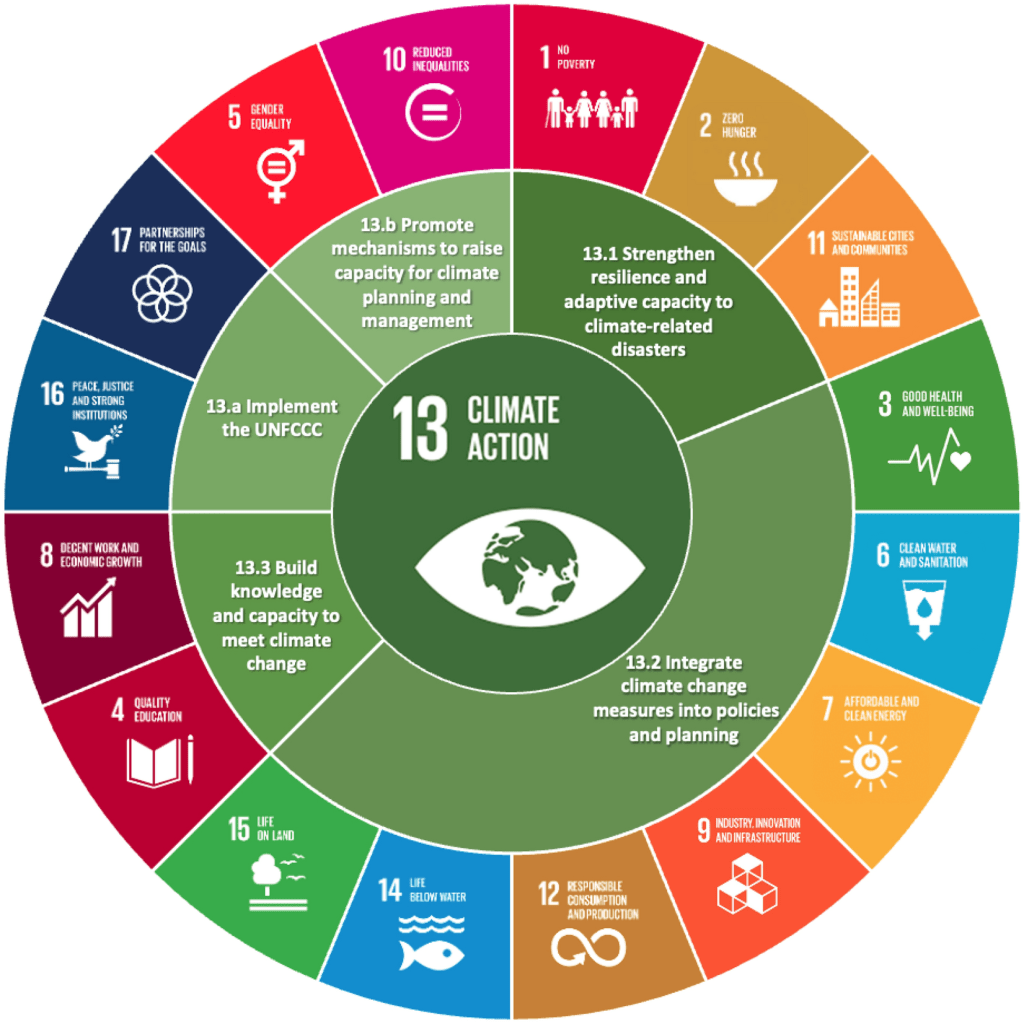
Climate change is Goal 13: Climate Action and a product of areas in which we, as a globe, have fallen short. It actually touches on several, if not all of the SDGs. For example, climate change affects peoples health and well being, food production (poverty, hunger), and access to clean water due to drought, and flooding. See this wonderful chart below from Nature that illustrates the complex relationships.
Flooding can come from many sources, such as: rising waters; droughts which make the land less able to absorb the water and more likely to run off; and urban development which often replaces nature and covers permeable surfaces.
Impermeable surfaces increase water run-off and if black asphalt, also increase surface heat which further impacts climate and people. The heat from large roadways can stop incoming clouds from moving on and encourage them to dump large amounts of water on commuters, increasing accidents while depriving neighboring communities from much needed rain.
Ways in which to combat these issues are being utilized in some areas of the world. A good example is one of by my faves – Not Just Bikes blog The Best-Designed Town in the Netherlands (and therefore, the world).
Trees are wonderful for providing shade to reduce heat (and release moisture and clean air) but also their roots can absorb excess water and make the area around them more permeable. Additionally, the cooler temperatures they help create, keep people healthier than extreme temperatures, and they also help people to be more productive.
The optimal temperature for human cognition is between 68-72 degrees Fahrenheit or 20-22.22 degrees Celsius. People are literally more productive; can think more clearly so they do a better job; and are happier (less prone to anger and better able to cope with their problems) in the presence of trees, greenery, and cooler temperatures (Jones, L., 2007. A Theoretical Framework of a Bionomic Approach to Improve Individual and Organizational Outcomes).
The olfactory (smell/odor) component of nature has been found to have several benefits to human health and well-being. Some odors have been found to reduce depression and fatigue and others increase relaxation and improve sleep. Some studies have used natural scents to increase productivity, cognition, and performance under stressful conditions (Washburn, Jones, et al., 2003).
So, what can we do? Well, the US, which the UN currently ranks 193rd in support of UN’s missions to protect against climate change. As a matter of fact, “190 of the 193 UN Member States have participated in the Voluntary National Review (VNR) process, presenting their national plans and priorities for sustainable development. Only three countries have not participated: Haiti, Myanmar, and the United States (U.S.).” (The Sustainable Development Solutions Network. A Decade After Their Adoption at the UN, the World Remains Highly Committed to the Sustainable Development Goals, 2025).
China, has an extensive history of designing their cities (a very long time ago) to work with nature, rather than against it. They have taken these past lessons and modern knowledge to pilot over 30 major Sponge City projects, with 600 more cities signed up to become Sponge Cities in the future! Vox did a very nice video on “How China is designing flood-resistant cities” which you can find on YouTube. It is excellent!
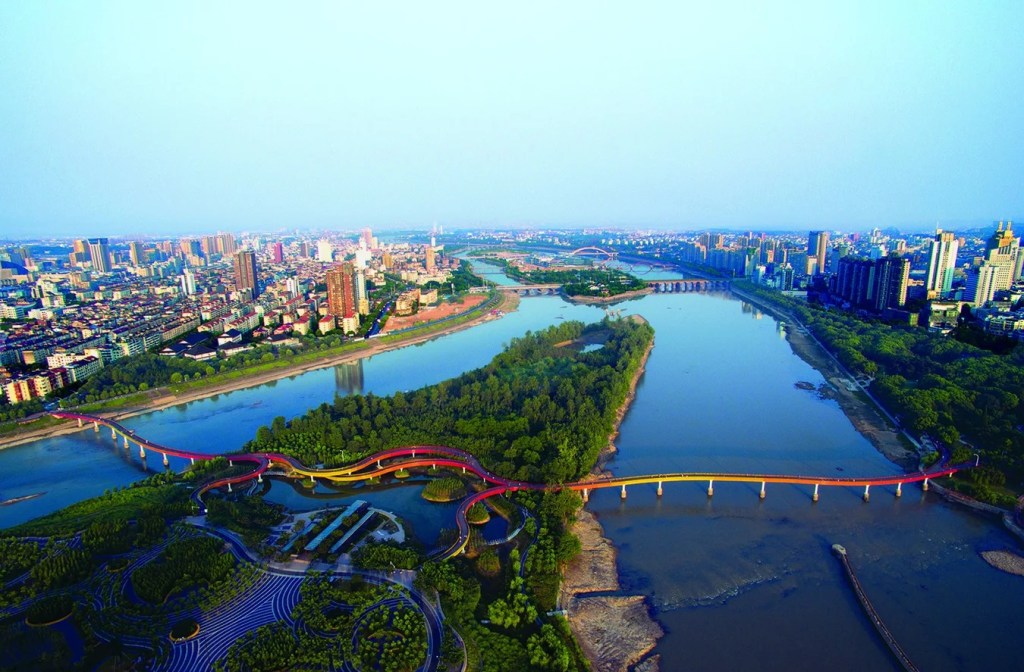
[Scientific American: “Yanweizhou Park (center) absorbed high river water during a heavy monsoon, protecting Jinhua, China, from flooding.” Photo credit: “Turenscape” in their article “Sponge Cities Can Limit Urban Floods and Droughts”]
The term “Sponge City” seems to have originated in China. Sponge Cities are designed to use nature to control water. See the picture above – this is one of China’s Sponge Cities. And that beautiful red and yellow bridge is a pedestrian only bridge!
China and the Netherlands provide us with beautiful examples of how to work with nature to prevent flooding while also providing opportunities for people to socialize and immerse themselves in all the benefits of nature – mental health, physical health, and social opportunities (unlike car-centric cities). These designs are beautiful and beneficial for people and the planet!
The World Economic Forum has a wonderful page that talks about “What are ‘sponge cities’ and how can they prevent floods?“ And a video you can see here. They briefly explain how they create gardens, wetlands, and permeable surfaces to allow water to be absorbed and even stored in underground tanks to prevent flooding, protect health and clean water, and release stored water when needed later in the year.
Countries all around the world are implementing Sponge City designs into their own cities. Singapore and the Netherlands have been working with nature to combat climate change and flooding for a long time. Despite the lack of government support, the United States has pockets of projects in cities like Portland and New York, who have been using rain gardens, green roofs, bioswales and permeable pavements to mimic natural hydrology and reduce flood risks. For example, Philadelphia has a Green Cities Clean Waters program in conjunction with the Philadelphia Water Department. Unfortunately, America is very far behind the rest of the developed world in large scale efforts to improve sustainable transport and combat clime change.
Nevertheless, we can all try to do our part by letting people know what the possibilities are and find out where your community development plans are designed and get involved. From personal projects to community projects, every little bit towards a sustainable future helps.
 kapiikai.org
Leave a comment